


A well-designed house entrance should balance style, function, and everyday convenience. Thoughtful choices such as layered lighting, weather-resistant finishes, clear pathways, practical storage, and well-placed greenery can make even a small entrance feel welcoming. The best entrance designs also reflect the home’s interiors and the routines of the people living there.
An entrance has to do a surprising amount of work. It receives guests, catches dusty footwear, holds delivery parcels, and gives people their first glimpse of the home beyond it. Yet it is often treated as leftover space. A well-planned house entrance design does not need a grand porch or an expensive renovation. Good lighting, a clear pathway, and somewhere sensible to keep shoes may make more difference than elaborate décor. Here are a few practical ideas for getting it right.
The main door naturally draws attention, but it does not have to be heavily carved to make an impression. A warm timber finish, a deep green or blue paint colour, or simple fluted detailing can give it character.
Look at the door from inside and outside before settling on a finish. Ideally, it should introduce a colour, material or metal that appears again in the interiors. Good home entrance decor feels connected to the rest of the house, not added as an afterthought.
A single ceiling fitting may illuminate the entrance, but it rarely makes it welcoming. Pair the general light with wall sconces, a pendant, or a concealed light that brings attention to the door.
Steps and pathways need their own illumination so level changes remain visible after dark. Choose warm or neutral light instead of a harsh, blue-toned white. For an exposed entrance, check that every fitting is suitable for outdoor use and positioned so changing a bulb will not be an ordeal.
Nobody should have to work out how to reach the entrance. Paving, floor tiles, or a runner can visually lead people to the door while separating the route from a lawn, driveway, or parking area.
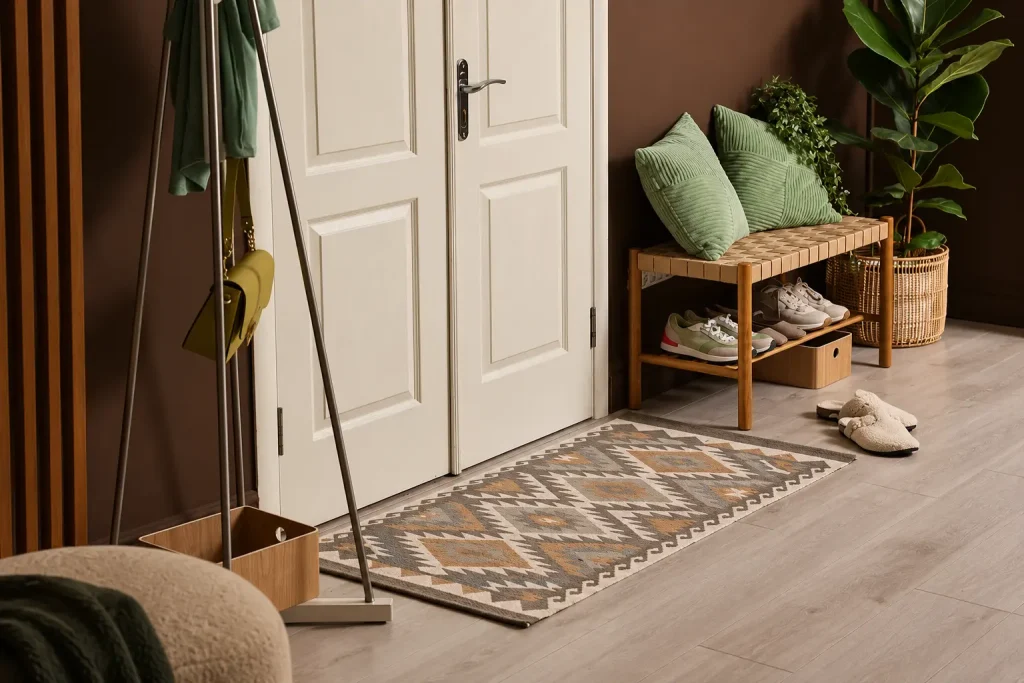
For an outdoor home entry design, use slip-resistant flooring that can cope with rain and dust. In an apartment corridor, even a correctly sized doormat and an uncluttered threshold can look more considered. Avoid loose rugs near steps or anywhere they may catch under the door.
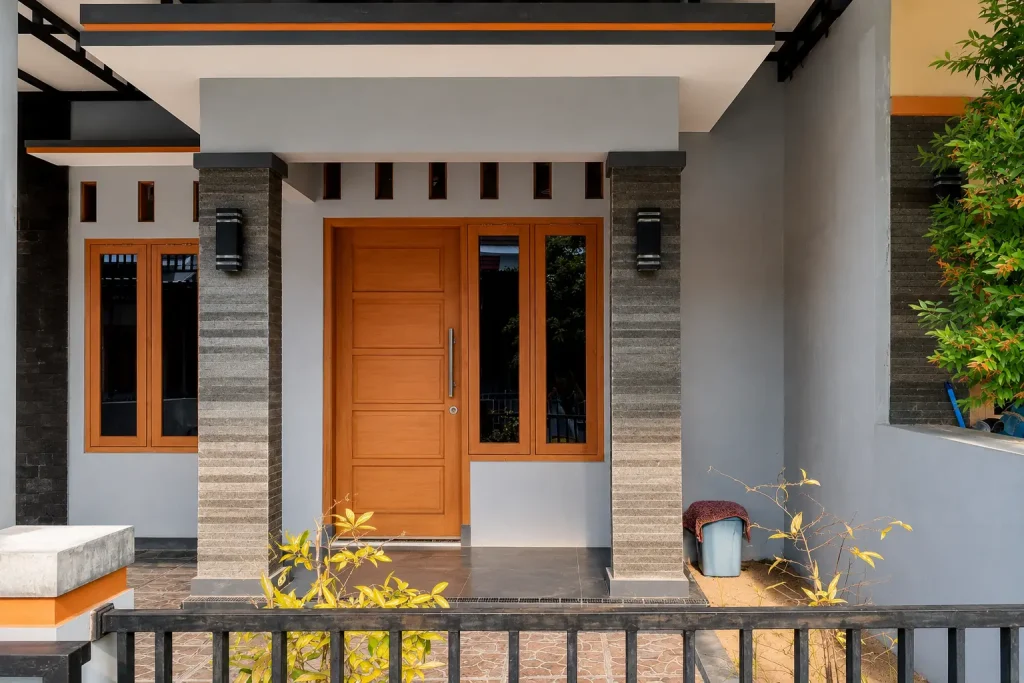
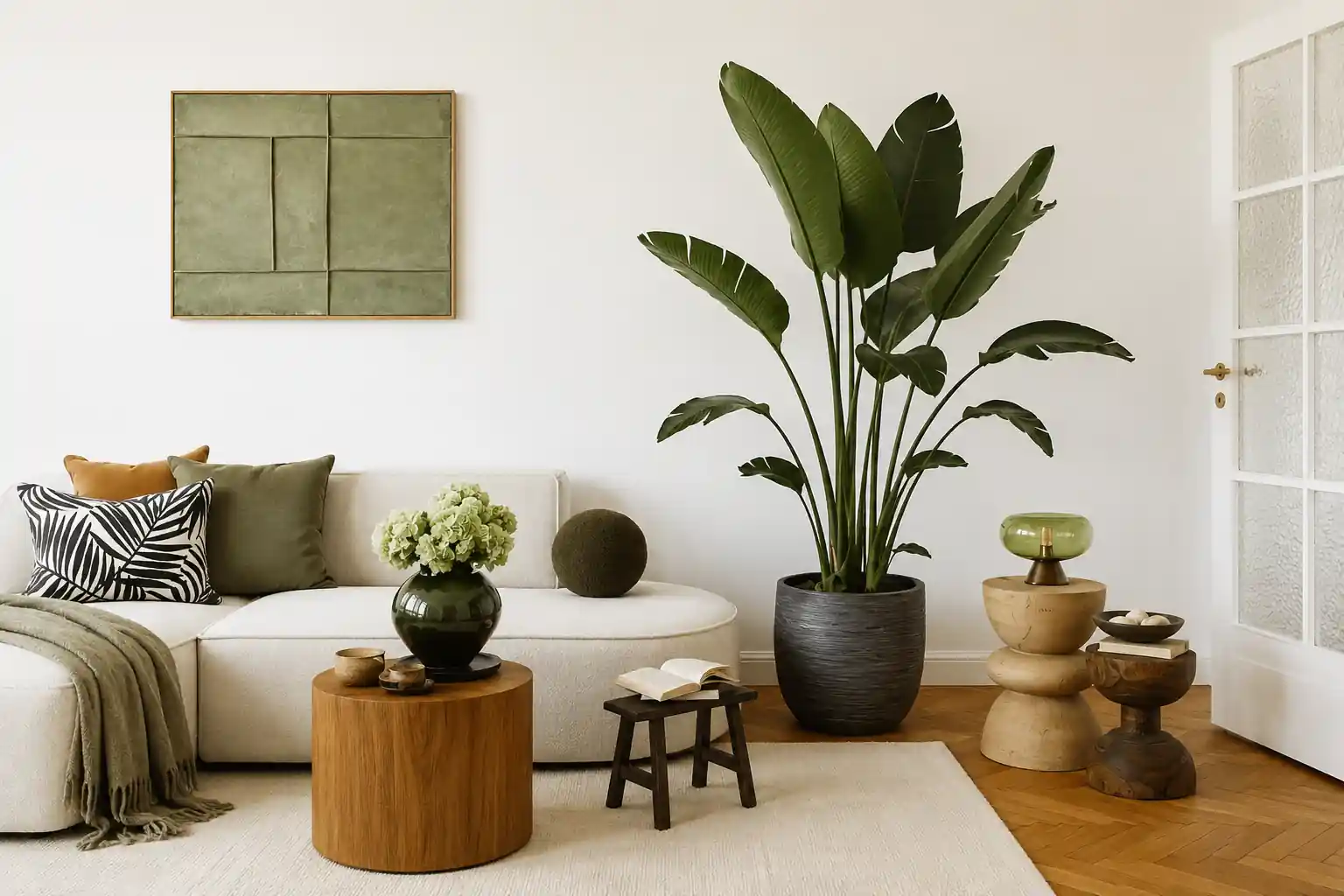
Plants bring instant softness to stone, metal and painted walls. One tall planter beside the door or a balanced pair often looks better than several small pots competing for space.
Choose plants based on available sunlight rather than appearance alone. Remember to leave room for the door to open fully and for people carrying luggage or groceries to pass. Planter trays and proper drainage will also prevent water marks from undoing the effect.
When browsing main door and entrance wall design ideas, decide what should attract the eye first. If the door is bold, the wall can remain quiet. If the door is simple, textured paint, natural stone, tiles, or restrained wooden panelling can create interest around it.
An Indian home entrance wall design might also include a nameplate, toran, brass bell, or space for a diya. The result feels more personal when you choose the pieces deliberately instead of squeezing them into whatever space remains.
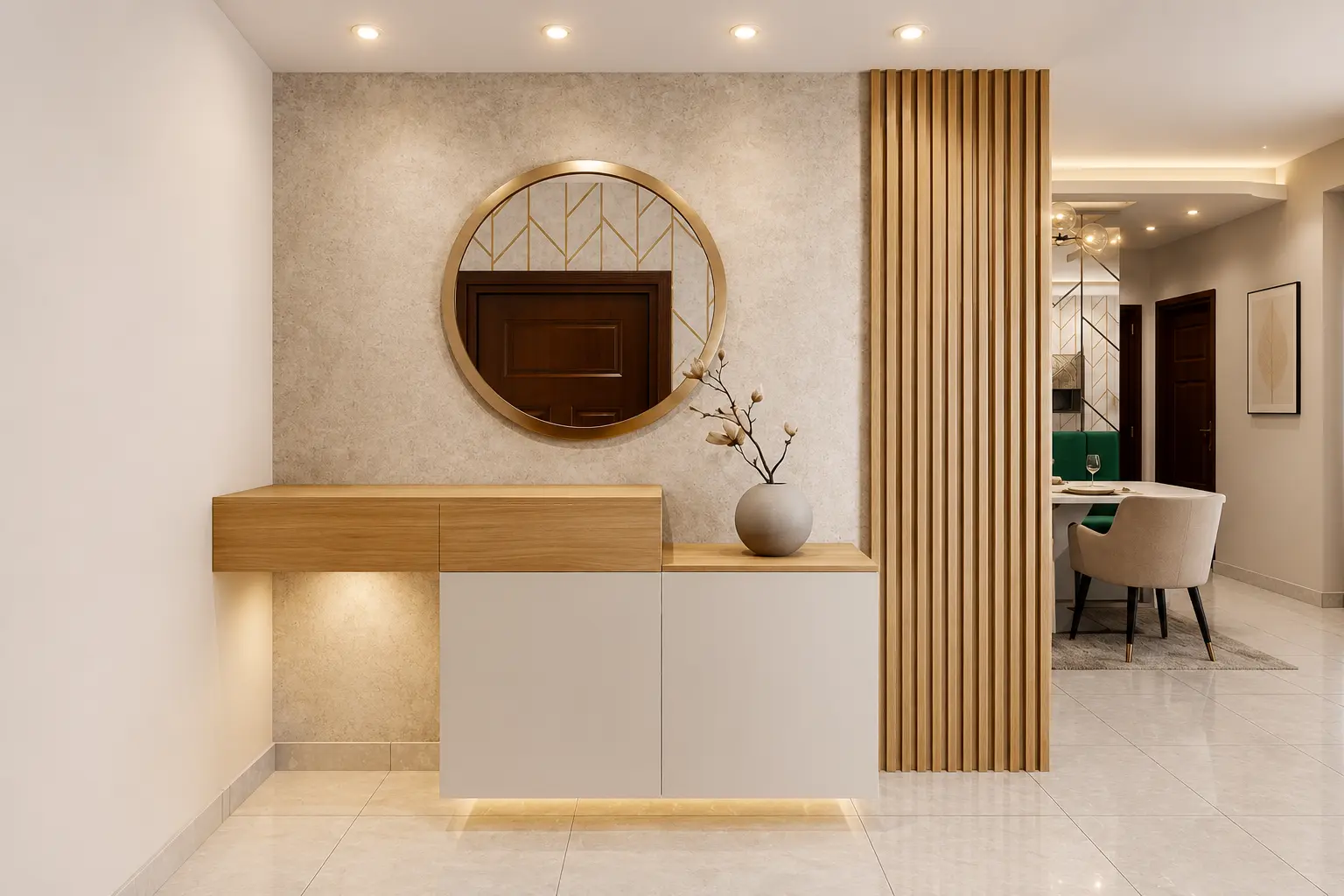
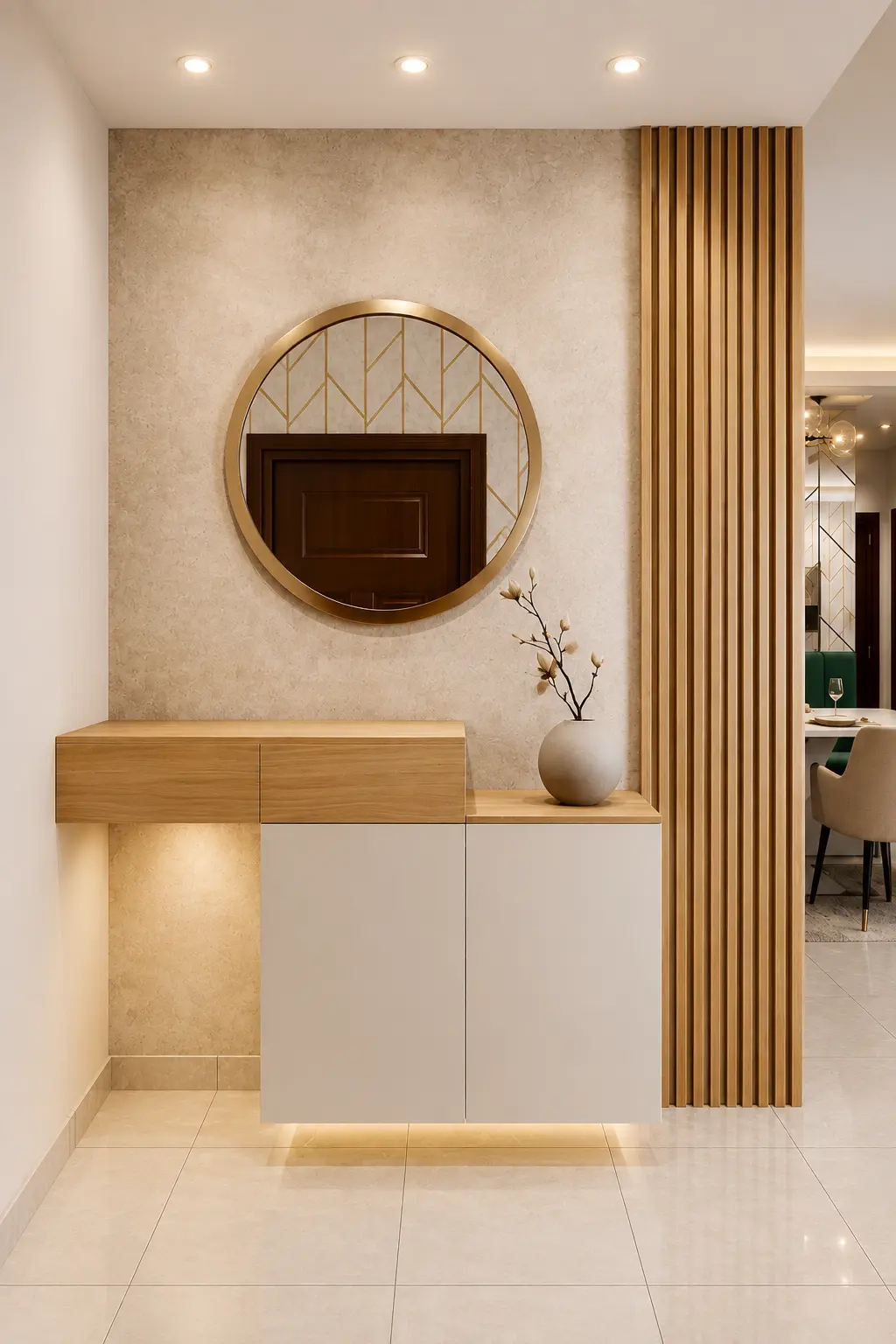
A narrow entrance quickly becomes crowded once shoes, umbrellas, bags and helmets arrive. Wall-mounted storage keeps more floor visible, while a slim shoe cabinet can double as a ledge for keys.
A mirror may bring light into a dim corner, but it should not obstruct the doorway or reflect an untidy storage area. Limit the display to one or two pieces. The most successful entryway decor ideas leave enough space for the entrance to function comfortably.
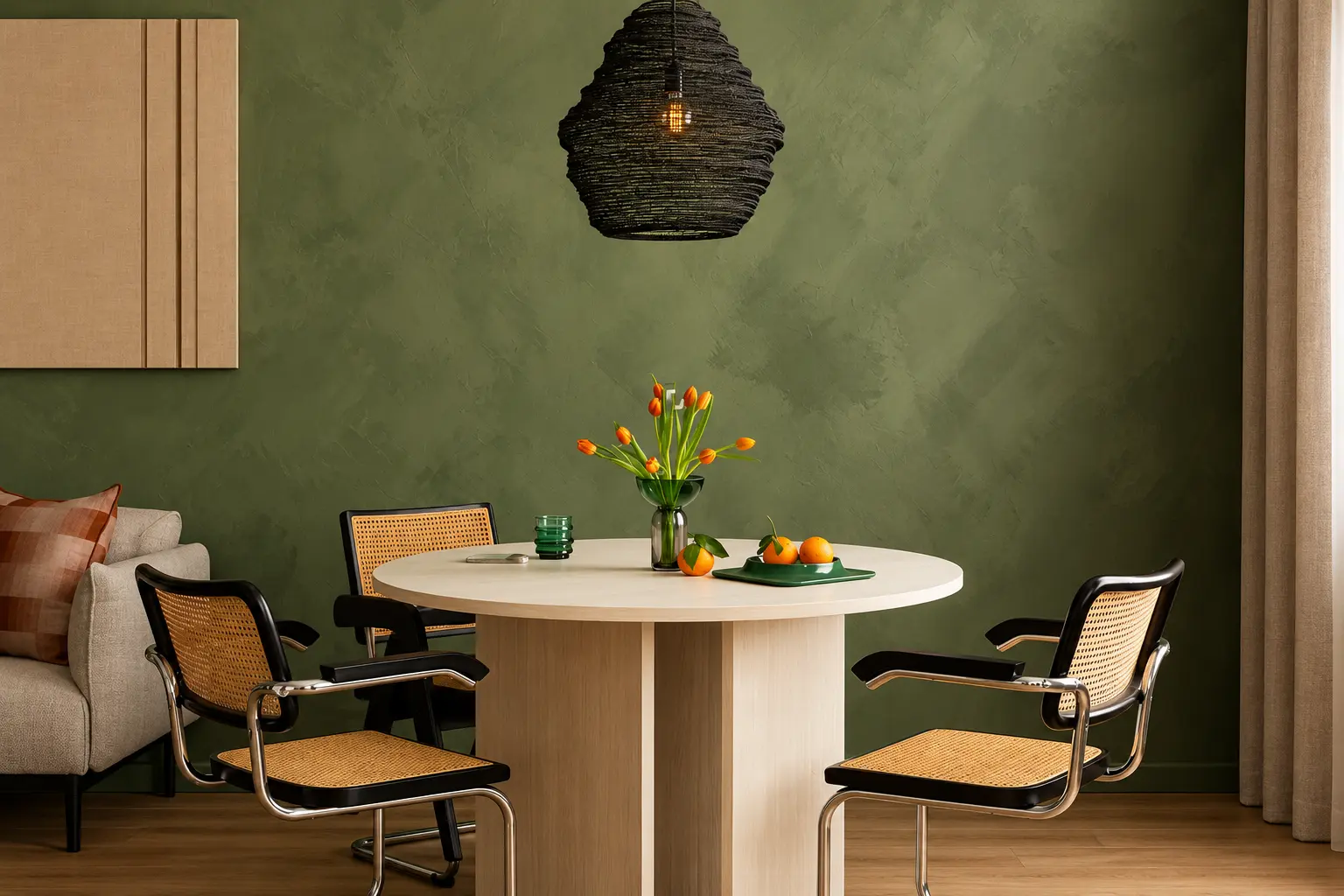
More floor area does not automatically create a better entrance. Without a focal point, a large foyer can feel bare or disconnected. A console with artwork above it, a bench near the shoe storage or a runner leading towards the living room can divide the space into useful zones.
In a generous foyer design, repeat finishes from adjoining rooms so that the entrance belongs to the same visual story.
Before approving a material, consider what it can withstand during a Mumbai monsoon or a dusty Bengaluru summer. For example, interior designers in Mumbai tend to prefer exterior-grade paint, sealed wood, rust-resistant metal, and anti-skid tiles to handle the city’s constant humidity.
Outdoor cushions should have removable covers, and doormats should dry quickly. Leave access for cleaning around planters and beneath furniture. A beautiful house entrance design loses its charm quickly if every surface needs constant attention.
House numbers, door handles, bells and nameplates are functional, but they also shape the look of the entrance. Coordinating their finish gives the area a neater appearance without making it overly matched.
Among the easiest home entrance decor ideas are a favourite piece of art, a handcrafted basket, a sculptural planter or a seasonal floral arrangement. Pick something that says a little about the people living inside, not simply what happens to be trending.
An entrance is used very differently by a family with school-going children, a couple that frequently hosts guests, and a household with an elderly parent. Bonito Designs’ LifeDesign approach starts with these routines.
This interior design company brings together the doorway, home entrance decor, foyer storage, lighting, and adjoining rooms through end-to-end planning, in-house execution and ISO-certified systems for Mumbai and Bengaluru homes.
A thoughtful house entrance design should make arriving home feel easy before it impresses anyone else. Book a consultation with Bonito Designs to create an entrance that is welcoming, practical and recognisably yours.
Use warm lighting, a well-finished main door, a clear pathway, a few plants, and practical storage. Keeping the entrance uncluttered and coordinating materials with the interiors can also create a more welcoming look.
For a small or narrow entrance, choose wall-mounted storage, a slim shoe cabinet, a carefully positioned mirror, and minimal décor. Keeping more of the floor visible helps the entrance feel larger and easier to use.
Exterior-grade paint, sealed wood, rust-resistant metal, anti-skid tiles, and quick-drying fabrics are practical choices. Select materials based on local conditions such as rain, humidity, dust, and sunlight.
An Indian home entrance wall can include elements such as a nameplate, toran, brass bell, diya space, textured finishes, stone, tiles, or wooden panelling. Choose a few coordinated features rather than overcrowding the wall.
A functional foyer should have adequate lighting, shoe and everyday-item storage, a clear walking path, and a defined focal point such as a console, bench, mirror, or artwork. The finishes should also connect visually with the adjoining rooms.